Modern vs. legacy

What changes when you move to a modern DMS

This isn't a hit piece on legacy DMS. The systems running most equipment dealerships today did the job for the era they were built in. The question is whether what was good enough 20 years ago is good enough for the dealership you're trying to run now.
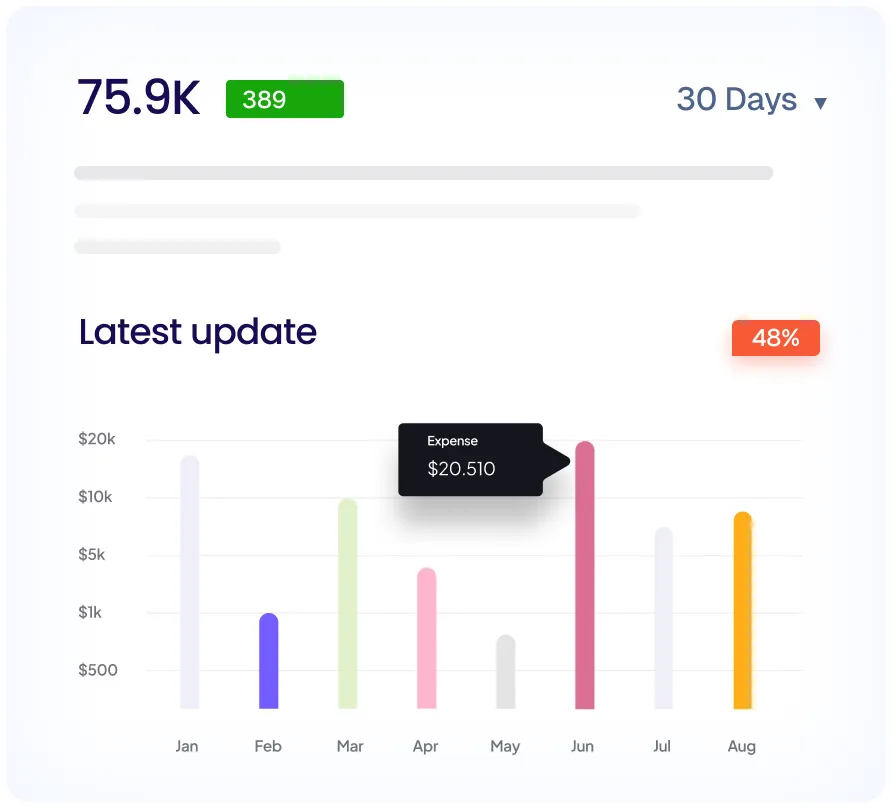
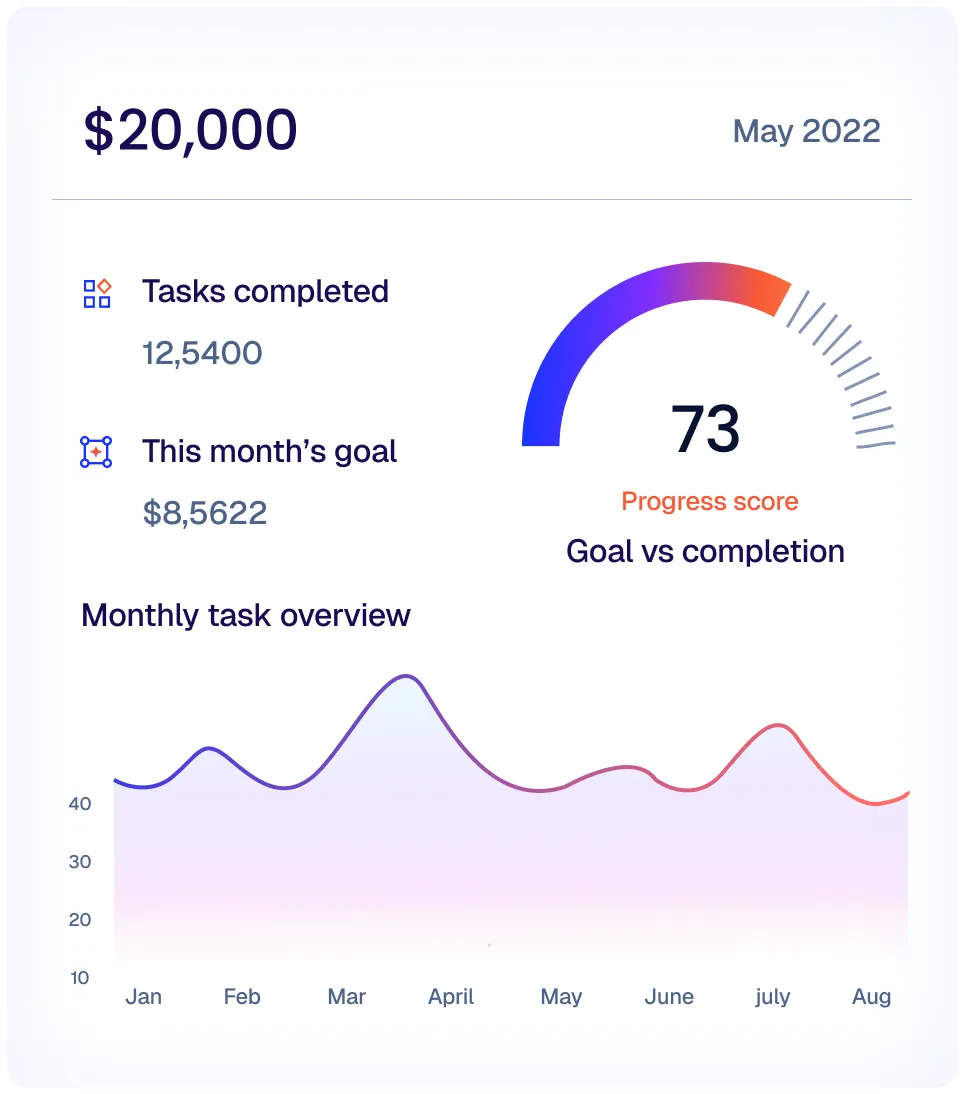
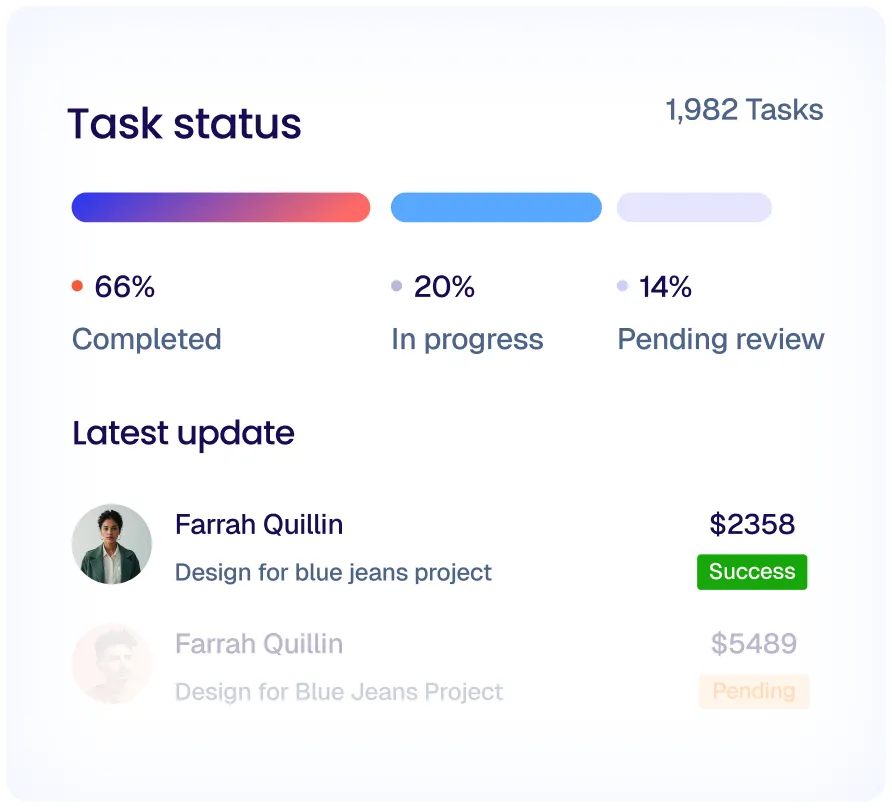
taskopia-home-two-hero-left
taskopia-hero-v2-2
taskopia-home-two-hero-right-2
John Deere
AGCO
STIHL
Bobcat
Hitachi
Paccar
Volvo
Develon
John Deere
AGCO
STIHL
Bobcat
Hitachi
Paccar
Volvo
Develon
John Deere
AGCO
STIHL
Bobcat
Hitachi
Paccar
Volvo
Develon
The Core Difference

Legacy DMS was built for a different era

Most of the DMS platforms equipment dealers run today were built decades ago. They were designed to handle basic accounting and a few operational workflows like service. They have lasted this long because of deep OEM integrations, and because no dealer wants to take on a migration without a clear return.

Flyntlok DMS
Decorative Flyntlok icon
No server. Nothing in your back room. The whole platform runs on Google Cloud.
Decorative Flyntlok icon
New features ship every other Wednesday. Nobody schedules anything. They just show up.
Decorative Flyntlok icon
Flyntlok focuses on the dealership. We do not try to be your accounting system. We integrate with QuickBooks Online, Sage Intacct, and Xero, companies with thousands of people working on accounting full time.
Decorative Flyntlok icon
Open API. If you run a tool we have not connected yet, we can still connect it.
Decorative Flyntlok icon
Access from any modern browser on any device. No VPN, no Windows-only requirement, fully mobile from anywhere.
Decorative Flyntlok icon
Need a report? Dynamic grids and dashboards let you drag in columns, set date ranges, and compare technician efficiency by location.
Decorative Flyntlok icon
One team handles migration, go-live, and post-launch support.
Legacy DMS
A server either sits at your dealership or lives in the vendor's data center and gets called cloud. That hosted version often runs worse than on-premise, because the software was never built for a cloud environment.
Upgrades happen once a year, if you are lucky. Support is difficult because nearly every customer is running an outdated, customized version of the code.
Most of these platforms are too rigid to add modern functionality like CRM, rental, or embedded SMS. They are accounting systems with some operational workflows bolted on.
Want to add AI? On a legacy architecture, that is close to impossible.
The screen looks like it did in 1995. Some vendors slapped a web wrapper on it and called it cloud.
Decorative Flyntlok icon
The strength: legacy vendors have decades of OEM relationships and feature depth on the workflows you've always done. We won't pretend that doesn't matter.
Side by side - What dealers care about

The ten rows that decide it

Most DMS evaluations come down to the same short list. Here is where a cloud-native platform and a legacy one actually diverge, including the one row where legacy still has the edge.

What dealers care about
Typical legacy DMS
Flyntlok
Where it lives
On a server in your back room
On Google Cloud, accessed from any browser
Updates
An annual project that disrupts everyone
Ships every other Wednesday. You do not have to do anything.
Multi-location
Each branch usually runs its own version
Every branch sees the same live data
OEM integrations
Deep relationships built over decades, a real strength
John Deere, Stihl, Bobcat, Volvo CE, Hitachi, AGCO, Peterbilt/PACCAR
Mobile access
VPN. Remote desktop. A login you forget.
Open a browser. Done.
Connecting other tools
Limited APIs. Often a paid integration project.
Open API. QuickBooks Online, Sage Intacct, Xero, plus payments, e-commerce, and shipping.
Accounting
A built-in GL competing for attention with everything else
QuickBooks Online, Sage Intacct, or Xero, synced in real time
Your data
Sometimes locked behind vendor processes
Yours. Full export, anytime, no lock-in.
True cost
License + servers + IT + VPN + upgrade fees + bolt-on tools
A monthly or annual subscription. That's it.
Training a new hire
Weeks to learn the green screen
A few days. It looks like everything else they already use.
What Dealers Notice

The differences that show up Monday morning

Buzzwords do not matter when your parts counter is backed up. Here is what actually changes for your team and your customers.

The parts counter on a Saturday morning

Today on legacy: Your parts guy is bouncing between three screens. He types in a part number that has not been updated in years, checks stock at the other branch, then logs into the OEM portal to place the order. The customer has been waiting six minutes.

On Flyntlok: Same lookup, one screen. He searches the way he would on Google, finds the current part number, sees what is in stock at every branch, places the OEM order, and the customer has a price in under a minute. Flyntlok learns what your team looks up most, so when that customer comes back the part is already on their profile.

Reporting at month-end

Today on legacy: Your controller exports to Excel or jumps into a bolt-on data warehouse, pulls from three branches, copies and pastes, fixes formulas, and finally has a P&L sometime in the second week of the next month. Every decision is two weeks late.

On Flyntlok: Real-time dashboards. Live financials through QuickBooks Online, Sage Intacct, or Xero. Your dealer principal can see the whole operation from a phone on a Tuesday afternoon.

Working from anywhere

Today on legacy: VPN. Remote desktop. A password your dealer principal forgets every time he tries to check something from the truck. If you're not in the building, you're not in the system.

On Flyntlok: Open a browser. Run your dealership from the truck, the jobsite, or the kitchen table, because the system actually works on the road.

Hiring the next generation

Today on legacy: Your new hire stares at a screen that looks like Windows 95 and wonders if this is a joke. Three weeks of training later, they sort of know what they are doing. Your best young people leave because the technology embarrasses them.

On Flyntlok: Your nephew could figure it out. It searches like Google and looks like every other piece of software your team already uses at home. He is completing sales orders by the afternoon. Training takes days, not weeks.

Total Cost of Ownership

The real bill is bigger than the invoice

When dealers compare DMS pricing, they compare the license line. That is the smallest part of the cost. Here is everything else a legacy DMS makes you pay for that Flyntlok does not.
Flyntlok Cost
Decorative Flyntlok icon
A monthly subscription per user
Decorative Flyntlok icon
No server. No IT. No VPN.
Decorative Flyntlok icon
Updates included, every other Wednesday
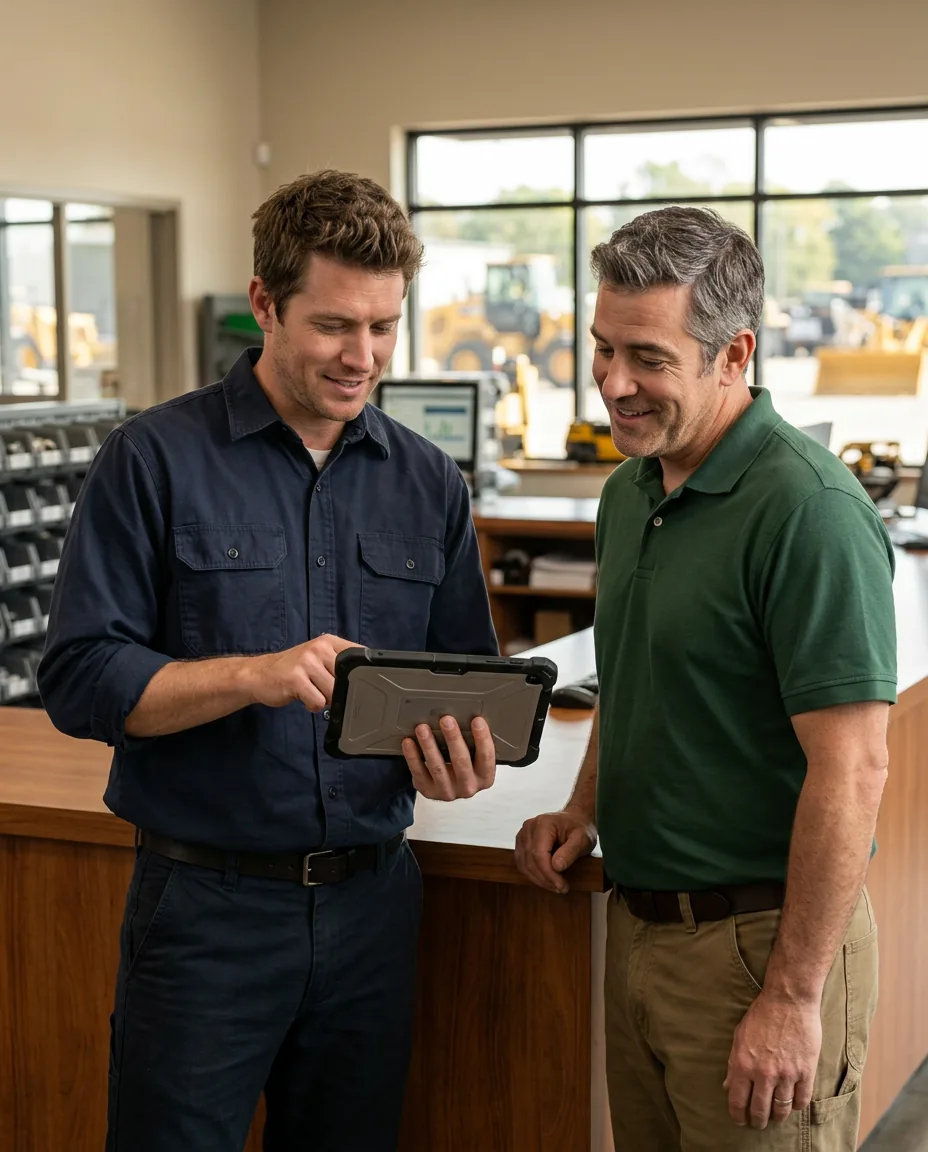
Dealership parts counter employee using Flyntlok on a tablet
Legacy Cost
The server itself, plus replacing it every five to seven years
The IT person who keeps the server alive (or the contractor you call when it's not)
VPN licenses for everyone who needs to work from outside the building
Annual upgrade projects. The vendor charges, and your team loses a week.
The day or two a year when the server goes down and the dealership stops
The deals you lose because someone else quoted faster
The technician you lost because the better-equipped competitor across town was hiring
The bolt-on CRM, the bolt-on reporting tool, and the bolt-on text-message system, because the legacy DMS cannot do any of it well

From CDK to Flyntlok

STS Truck & Trailer has been a family business since 1949. Five locations, Upstate New York and Pennsylvania, fleet customers who don't have time for software problems.

They were on CDK for years. It worked, until it didn't. Their fleet customers started asking for open data, telematics that actually showed up in the DMS, and real-time visibility on smart trailers. CDK could not deliver any of it.

They switched to Flyntlok in 2025. Four weeks later they had full operational visibility. Customers got self-service through the Sparks portal on day one.
White Quotes
“We had been running on CDK and it was a fine platform for where our dealership had been operating, but we needed more to compete in the marketplace. Most of the legacy software solutions dealers rely on are based on an architecture that was developed decades ago. Even though they may be hosted in a data-center and marketed as cloud, they are not.”
Nick Jacobs
Sr. Director of Finance & Operations, STS Truck & Trailer
When Legacy Is Still the Right Choice

Honest answer: we're not for everyone

Most vendors won't tell you this. We will. Here's when you should probably stay where you are.

Stay where you are if...
Decorative Flyntlok icon
Your dealership runs on one OEM workflow that only your current vendor has built, and it sits at the center of the business.
Decorative Flyntlok icon
You are already mid-project on a new accounting system or an ERP rollout. Two migrations in one year is one too many.
Decorative Flyntlok icon
You run a single location and a single brand, and nobody on your team is asking for mobile access, rental, or customer self-service.
Decorative Flyntlok icon
Ownership changes hands inside the next six months, and nobody wants to own a platform decision on the way out.
Decorative Flyntlok icon
The system works. The only real complaint is that it looks dated. That by itself is not a reason to migrate.
Decorative Flyntlok icon
If any of those describe your dealership, stay put. A migration nobody is ready for costs more than an old screen ever will.
Come talk to us if...
Decorative Flyntlok icon
You are paying for a server, an IT contractor, and VPN licenses just to keep the DMS reachable.
Decorative Flyntlok icon
Your branches cannot see each other's parts inventory in real time.
Decorative Flyntlok icon
You are buying a bolt-on CRM, a bolt-on reporting tool, and a bolt-on texting system because the DMS cannot do any of them.
Decorative Flyntlok icon
Month-end close lands in the second week of the following month, so every decision is two weeks late.
Decorative Flyntlok icon
You are losing young employees, and losing quotes to dealers who answer faster.
flyntlok vs legacy

Common questions

Is Flyntlok really cheaper than my current DMS?

On the license line, sometimes yes, sometimes no. On total cost, once you count the server, the IT support, the VPN, the upgrade fees, and the bolt-on tools you pay for separately, it is almost always cheaper. Run your own numbers first with our ROI calculator, then we will do the side-by-side math with you on the discovery call.

Can Flyntlok do everything my legacy system does?

For most dealer workflows, yes: parts, service, rental, sales, POS, CRM, and multi-location. The thing we deliberately do not do is run your general ledger. We integrate with QuickBooks Online, Sage Intacct, and Xero, because companies that do accounting full time do it better than a DMS module ever will. If there is a specific OEM workflow you depend on that we have not built, we will tell you.

What about my OEM integrations?

We integrate with John Deere, Stihl, Bobcat, Volvo CE, Hitachi, AGCO, and Peterbilt/PACCAR, with Toro on the way. If you depend on a brand we have not built yet, tell us during discovery. The roadmap is partly customer-driven, and we will not promise something we cannot deliver.

How does cloud reliability compare to my local server?

Honestly? It's not close. Google Cloud runs at uptime levels no dealership server room will ever match. The Craig Taylor team experienced multiple days of legacy server downtime before switching. Since moving to Flyntlok, that whole category of risk went away.

What if I have 20+ years of history in my current system?

We've migrated dealerships running 1981 systems with 25 years of hard-coded customizations. Customers, equipment, repair history, parts inventory, warranty data, accounting: it all moves. If something can't migrate cleanly, we tell you before go-live.

How does the accounting work if there's no built-in GL?

QuickBooks Online for smaller and mid-size dealers, Sage Intacct for larger multi-location groups, and Xero for dealers in Australia and New Zealand. All three sync with Flyntlok in real time, and all three have entire companies behind them dedicated to accounting, instead of one accounting module fighting for attention inside a legacy DMS.