NEW:
Two-way CRM email is in beta, and Smart Receive now runs right on the Receiving Voucher.
Key takeaways
John Deere's new parts warranty covers eligible John Deere Original Equipment (OE) service and repair parts for 24 months or 4,000 machine hours, whichever comes first. It applies to parts bought in the U.S. and Canada on or after Nov 1, 2026, and it doubles the old 12-month term (John Deere; Farm Equipment).
For a Deere dealer, that's a better promise to put in front of every customer at the counter. It's also a bigger record-keeping job. A claim on a part sold 20 months ago only holds up if the dealership can show when it was bought, what machine it went on, how many hours that machine had, and who installed it.
The warranty doesn't cover everything the same way. Dealer labor drops off after month 12, customer-installed parts get parts-only coverage, and REMAN, ESSENTIALS and Turf parts follow their own terms. Each of those splits is a place where a claim can stall, and where a customer can walk away thinking the dealership let them down.
This post covers what changed, what it means for the parts counter and the service shop, and the records that decide whether a claim gets paid.
Deere moved eligible OE service and repair parts from 12 months of coverage to 24 months or 4,000 hours. The clock starts on the purchase date, not the install date (John Deere; AgWeb). Who installs the part decides what the customer gets.
Three more details matter at the counter:
Deere announced the change alongside its Run It Your Way initiative, which gives owners more repair tools and information through Operations Center, Equipment Mobile, Shop.Deere.com and Operations Center PRO Service (John Deere; Equipment World). Read together, the two moves point the same way: more OE parts across the counter, and more of them installed outside the dealer's shop.
The parts counter just got a simple answer to the oldest objection in the parts business: "Why pay more for the Deere part?" Two years of coverage is easy to say and easy to understand. A will-fit part off the internet rarely comes with that.
That only helps if the counter actually says it. A few habits make the difference:
Dealer-installed parts get parts and eligible labor coverage for the first 12 months. That gives your service writers a real reason to quote the install, not just the part. "We put it in, and if it fails this year, the labor's covered too" is a stronger pitch than any discount.
The flip side is month 13. A part that fails in month 14 is still covered, but the labor isn't. If nobody told the customer, the service writer is the one who delivers the bad news. Put the labor end date on the work order and the invoice so it's never a surprise.
Expect more warranty paperwork, too. Longer coverage means more parts are still in warranty when they fail, and someone has to file those claims. If warranty admin already backs up in the busy season, plan for more of it in 2027 and 2028.
A 24-month warranty turns old counter tickets into live documents. When a part fails, the dealership needs to answer five questions fast, and the answers have to come from the record, not someone's memory.
Plenty of claims don't stall on the part. They stall on the paperwork. With the longer window, these gaps cost more:
The off-season is the right time to tighten this up, before the spring rush fills the shop. It's also the right time to fix the system underneath it: go live in the off-season, not in the middle of harvest (plan your DMS migration).
The new warranty is also a revenue opportunity. Two years of coverage gives the counter a reason to sell the OE part over the will-fit, and 12 months of labor coverage gives the shop a reason to sell the install, not just the part. Then every claim that gets paid keeps money in the dealership instead of taking it out of parts and service margin.
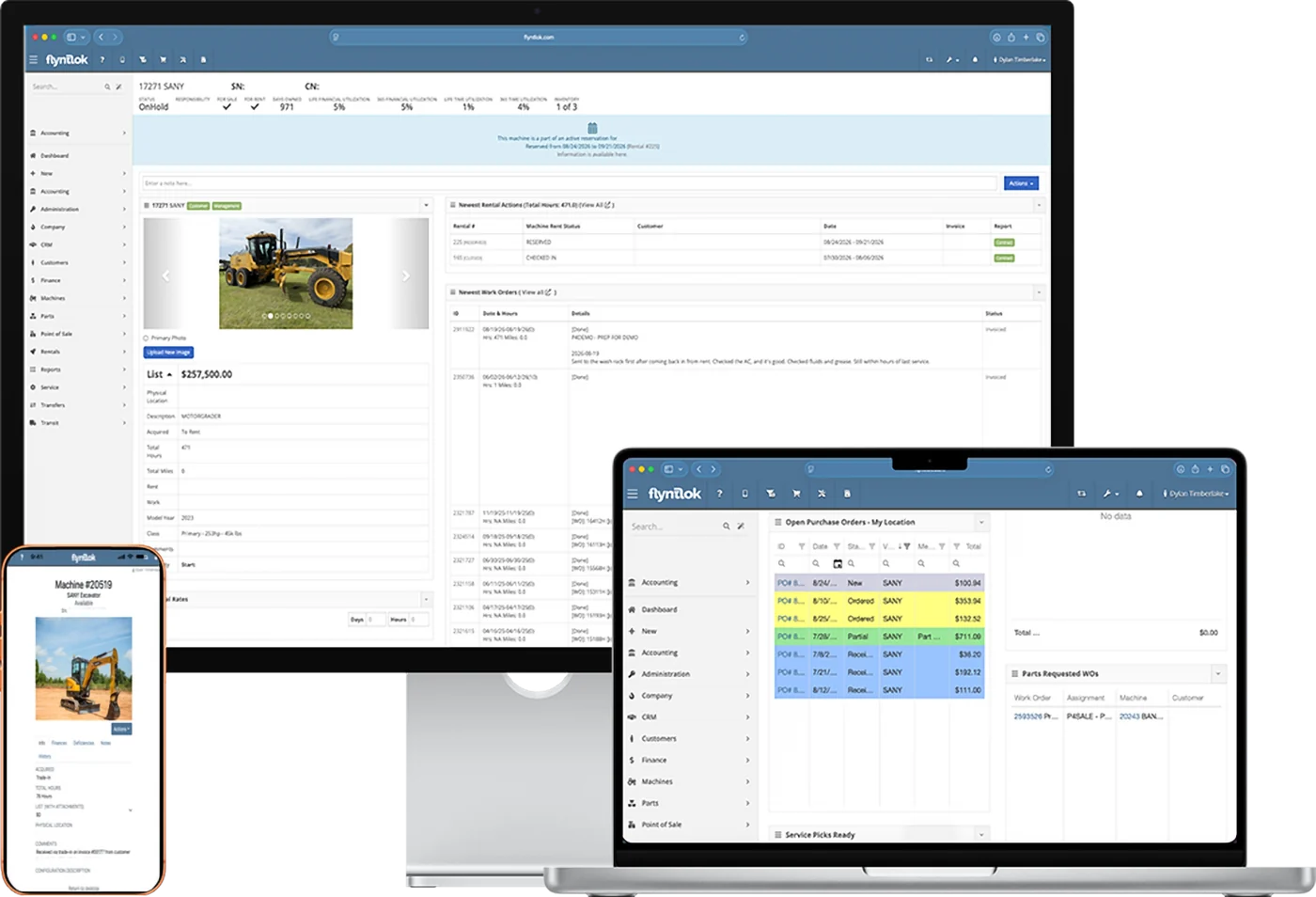
That only works when parts, service and warranty live in one connected system. In Flyntlok, the sale, the install and the claim details sit on the same machine record, at every dealership location. With Flyntlok's John Deere integration, parts orders go to Deere straight from the purchase order through JDPoint, and JDWarranty shows warranty status and PIPs on the machine. Smart Tech Notes turns a technician's voice note into a clean warranty write-up that the service writer reviews before it's submitted.
Carry more than Deere? See how Flyntlok runs agriculture dealerships and construction and heavy equipment dealerships, or see how it stacks up in Flyntlok vs. legacy DMS.

Parts
See Flyntlok in your dealership
Get a demo built around the way your team works today.
Request a demoQuick answers to the questions this article raises.
Eligible John Deere OE service and repair parts bought in the U.S. or Canada on or after Nov 1, 2026 are covered for 24 months or 4,000 machine hours, whichever comes first.
When an authorized John Deere dealer installs the part, parts and eligible dealer labor are covered for the first 12 months. Months 13 to 24 are parts only.
Parts installed by the customer or a third-party shop get parts-only coverage.
No. REMAN terms are unchanged, ESSENTIALS parts keep a 12-month warranty, and Turf parts move to a 12-month warranty.
They stay under the warranty terms in effect when they were bought.
Flyntlok's John Deere integration puts JDPoint ordering and JDWarranty status inside the DMS, so the counter and the shop work Deere from the same machine record.