NEW!
Meet Flyntlok at Equip Expo 2026:
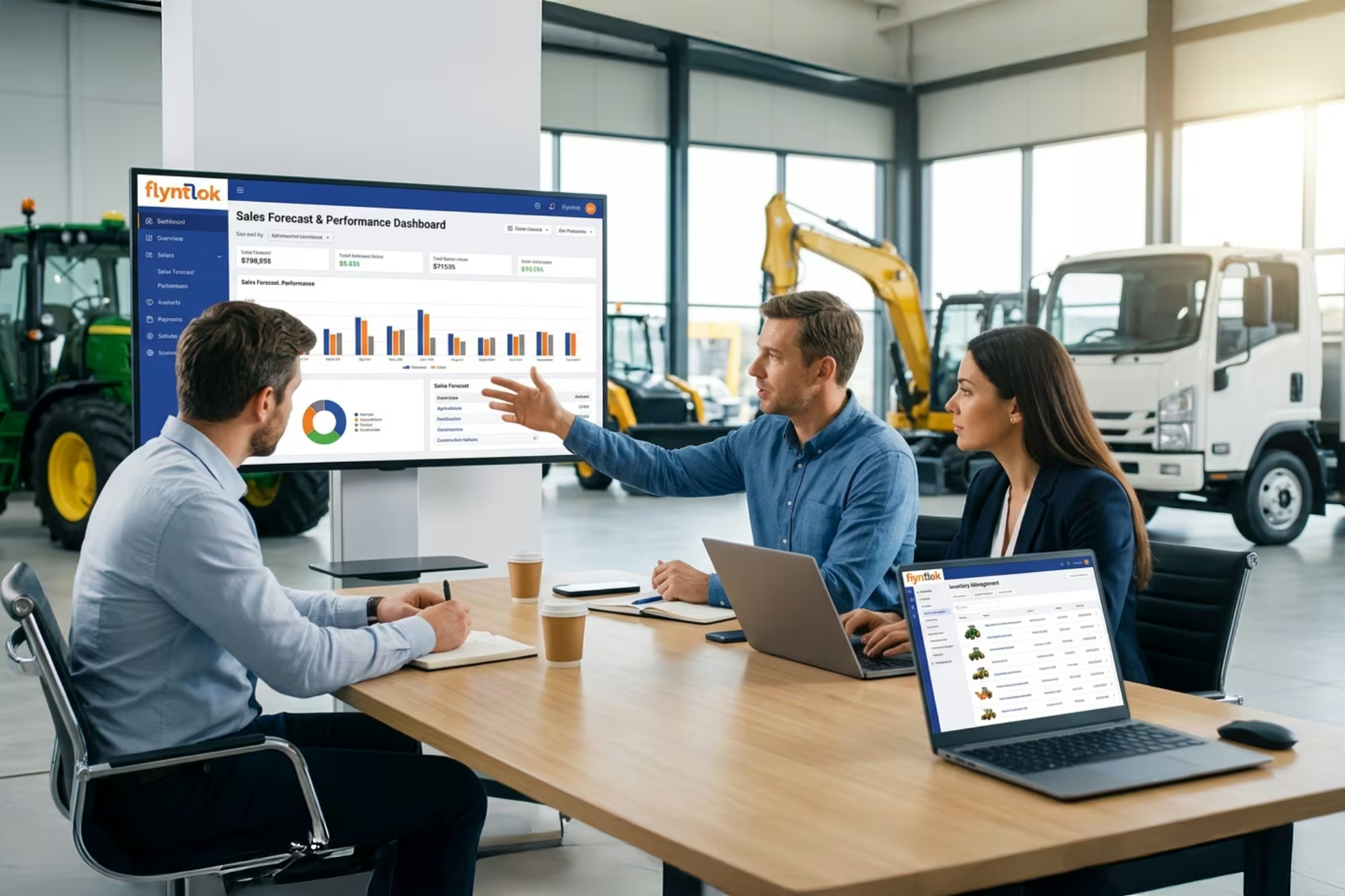
This isn't a hit piece on legacy DMS. The systems running most equipment dealerships today did the job for the era they were built in. The question is whether what was good enough 20 years ago is good enough for the dealership you're trying to run now.













Most of the DMS platforms equipment dealers run today were built decades ago. They were designed to handle basic accounting and a few operational workflows like service. They have lasted this long because of deep OEM integrations, and because no dealer wants to take on a migration without a clear return.
.svg)

Most DMS evaluations come down to the same short list. Here is where a cloud-native platform and a legacy one actually diverge, including the one row where legacy still has the edge.
Buzzwords do not matter when your parts counter is backed up. Here is what actually changes for your team and your customers.
When dealers compare DMS pricing, they compare the license line. That is the smallest part of the cost. Here is everything else a legacy DMS makes you pay for that Flyntlok does not.

Most vendors won't tell you this. We will. Here's when you should probably stay where you are.
On the license line, sometimes yes, sometimes no. On total cost, once you count the server, the IT support, the VPN, the upgrade fees, and the bolt-on tools you pay for separately, it is almost always cheaper. Run your own numbers first with our ROI calculator, then we will do the side-by-side math with you on the discovery call.
For most dealer workflows, yes: parts, service, rental, sales, POS, CRM, and multi-location. The thing we deliberately do not do is run your general ledger. We integrate with QuickBooks Online, Sage Intacct, and Xero, because companies that do accounting full time do it better than a DMS module ever will. If there is a specific OEM workflow you depend on that we have not built, we will tell you.
We integrate with John Deere, Stihl, Bobcat, Volvo CE, Hitachi, AGCO, and Peterbilt/PACCAR, with Toro on the way. If you depend on a brand we have not built yet, tell us during discovery. The roadmap is partly customer-driven, and we will not promise something we cannot deliver.
Honestly? It's not close. Google Cloud runs at uptime levels no dealership server room will ever match. The Craig Taylor team experienced multiple days of legacy server downtime before switching. Since moving to Flyntlok, that whole category of risk went away.
We've migrated dealerships running 1981 systems with 25 years of hard-coded customizations. Customers, equipment, repair history, parts inventory, warranty data, accounting: it all moves. If something can't migrate cleanly, we tell you before go-live.
QuickBooks Online for smaller and mid-size dealers, Sage Intacct for larger multi-location groups, and Xero for dealers in Australia and New Zealand. All three sync with Flyntlok in real time, and all three have entire companies behind them dedicated to accounting, instead of one accounting module fighting for attention inside a legacy DMS.